

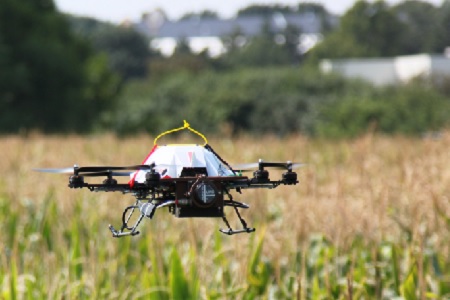
FAA proposes timeline for the development of drone standards.
Amazon, Google, and other major retailers are all eager to have the opportunity to deploy drones for consumer delivery of packages in an effort to reduce costs and boost profits. In 2015, the FAA issued a ruling that gave Amazon permission to fly drones for delivery service, with a host of restrictions, clearing the way for outdoor drone delivery testing, as Innovative Retail Technologies reported. And Google also unveiled a drone delivery initiative in 2014, launched in Australia. Both retailers are looking to use the technology to improve delivery services and reduce costs.
Now, however, the FAA says that drones for package delivery are likely three or more years away from becoming a widespread commercial reality, a timeline suggested by plans outlined by federal officials and their technical advisors for development of further drone standards and technical guidelines for collision-avoidance technology, according to The Wall Street Journal. And even strong proponents of the drone technology predict that unmanned aerial delivery probably won’t see real momentum until at least 2020.
“It’s not outside the realm of possibility that by the end of the decade, we could see more routine uses” of package-delivery drones, according to Paul McDuffee, co-chairman of the federal standards-setting panel and a high-ranking official with Boeing Co. ’s drone-making unit, Insitu Inc.
The FAA has already issued rules for routine commercial uses of small drones, limiting them to less than 55 pounds in weight, and flying no higher than 400 feet within sight of operators, as The Wall Street Journal reported. Now the FAA will focus on regulation of drones over suburban and possibly urban populations and for inspection drone use in railroads, pipelines, and other remote industries.
In 2015, Amazon criticized the FAA for moving too slow in terms of creating approval and guidelines for commercial use, with Paul Meisner, Amazon’s vice president for global public policy, stating “While the FAA was considering our applications for testing, we innovated so rapidly that the UAS approved last week by the FAA has become obsolete. We don’t test it anymore. We’ve moved on to more advanced designs that we already are testing abroad.”
For the FAA, the key sticking point to faster approval appears to be the development of collision-avoidance technologies that would help ensure that drone flights are safer. FAA officials are also concerned that rules should be both conservative and comprehensive in nature.
Since the first round of regulations went into effect last month, companies interested in drone delivery have continued to announce drone delivery pilot projects but with far less energy and urgency as they wait to see what the FAA will do.
According to NPR, The drone association estimates that in the first 10 years of being integrated into the national airspace, the industry will create more than 100,000 jobs and generate more than $82 billion for the economy.
"If the federal government continues to embrace drone technology policy that balances safety and innovation, by 2025 our country will reach one million drone flights per day," Douglas Johnson, vice president for technology policy at the Consumer Technology Association, said in a statement.
